Millennial Fertility
By ResearchAI on 2025-10-31 09:15:28
# Millennial Fertility: Biological Limits, Social Realities, and Legacy
## Abstract
The millennial generation – those born roughly between 1981 and 1996 – reached adulthood during the late‑2000s Great Recession. Economic instability, mounting student debt and rising housing costs combined with shifting cultural norms to produce a generation that delays or forgoes parenthood. At the same time, fundamental biological realities of reproduction have not changed: female fertility falls steeply after the early thirties, and male fertility also declines with age. This report integrates scientific findings on fertility limits, statistical data from the United States and worldwide, and a case study of Metro Atlanta to examine how biology and socio‑economic headwinds shape millennial family formation. Assisted reproductive technologies (ART) such as in‑vitro fertilisation (IVF), egg freezing and improved male fertility testing are increasingly used to extend fertility windows, yet age remains the single strongest predictor of success. The decline in natural fertility is paired with global demographic shifts: most regions now fall below replacement-level fertility, leading to ageing populations. For many, these demographic patterns carry spiritual weight: children are viewed as a gift and a responsibility passed down through generations. By honouring factual evidence and the PaP.Arazzi.Me Code – valuing truth, legacy and spiritual stewardship – this report aims to inform millennials about their reproductive horizons and encourage policies that support family building.
## Introduction – Millennials, Recession and Reproduction
Millennials graduated into one of the deepest recessions since the Great Depression. The 2008‑2012 economic downturn crippled job prospects and coincided with ballooning student loan debt. Sociological studies show that student debt delays family formation; women carrying college loans are significantly less likely to have children on schedule【343360094387464†L144-L154】. As a result, the *mean age at first birth* in the United States climbed from 26.6 years in 2016 to 27.5 years by 2023【547184329488163†L296-L305】. This trend is even more pronounced in major metropolitan areas like Atlanta, where the median age of women increased from 33.8 in 2000 to 37.6 by 2021【431761167413400†L48-L60】.
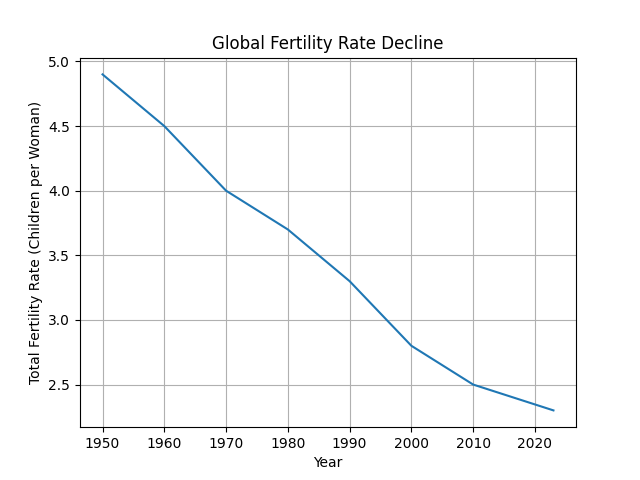
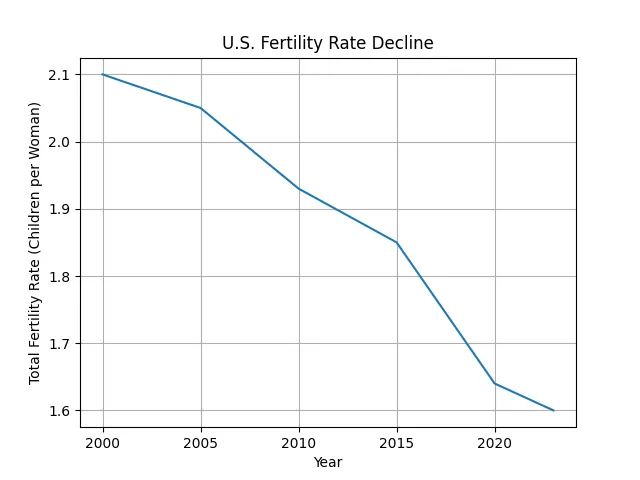
The millennial fertility decline is part of a broader demographic shift. Worldwide, the total fertility rate (TFR) fell from roughly 4.9 children per woman in the 1950s to around 2.3 by 2023【471453991527533†L23-L30】. In the United States, provisional data for 2024 show that the national TFR dropped to 1.626 births per woman【471453991527533†L23-L30】—well below the replacement level of 2.1. Such trends have led to population ageing and concern about social security systems, while also creating new markets for fertility services.

*Figure 1 – Global fertility rates have plunged since the mid‑20th century. Worldwide TFR fell from ~4.9 children per woman in the 1950s to ~2.3 by 2023【471453991527533†L23-L30】.*
## Biological Age Limits in Fertility
### Female fertility
A woman is born with a finite number of eggs. Egg quality and quantity decline sharply after the early thirties. Medical research shows that the “proven window of peak female fertility” remains in the twenties and early thirties; miscarriage risk and chromosomal abnormalities rise significantly after age 35. Modern clinical trials are exploring treatments such as rapamycin to slow ovarian ageing—one 2024 trial suggests it could delay menopause by ~5 years【547184329488163†L318-L323】—but these therapies are experimental and not widely available. The mean age at first birth in the U.S. continues to rise, reaching 27.5 years in 2023【547184329488163†L296-L305】, meaning many women attempt conception at ages when natural fertility is falling.
### Male fertility
Contrary to popular belief, men also experience age‑related fertility decline. A review of semen studies reports that sperm motility decreases by 0.17–0.6 percent per year, resulting in a 3–12 percent decline over 20 years【872897450735423†L297-L306】. Another study found a 0.8 percent annual decline in sperm morphology【872897450735423†L316-L319】. Lower semen volume, motility and DNA integrity correlate with reduced natural conception rates, though assisted reproductive techniques can mitigate some effects. Nonetheless, male factor infertility accounts for about 20 percent of infertility cases and contributes to roughly half of all infertile couples【47†L148-L156】.
## Assisted Reproductive Technologies (ART)
### In‑vitro fertilisation and egg freezing
ART offers ways to extend fertility windows. In the U.S. in 2022, 251,542 patients began 413,776 ART cycles, producing 98,289 babies—about 1 in 37 births【71†L16-L23】. The Society for Assisted Reproductive Technology reports that ~95,860 IVF infants were born in 2023 (2.6 percent of U.S. births)【31†L360-L366】. In the UK, IVF births rose from ~8,700 in 2000 to ~20,700 in 2023, representing more than 3 percent of all births; for women aged 40–44, 11 percent of births were via IVF, compared with only 2 percent for women under 35【155109816051327†L100-L107】【155109816051327†L196-L201】. Success rates decline steeply with age: live birth per embryo transfer is ~49 percent for women under 35 but only ~23 percent for ages 38–40【71†L125-L129】. Egg freezing cycles have increased dramatically; however, women freezing eggs after age 41 need roughly three times as many oocytes to achieve one live birth compared with women who freeze before 35【40†L323-L331】【40†L326-L334】.
### Male fertility testing
Historically fertility workups focused on women, but clinics now routinely assess male partners. Home sperm‑count kits, DNA fragmentation assays and comprehensive semen analyses are increasingly accessible. The Centers for Disease Control and Prevention notes that 28 percent of ART seekers cite male‑factor issues【71†L79-L84】. Better male diagnostics have improved treatment plans and reduced unnecessary interventions on female partners.

*Figure 2 – Rising IVF share of births in older women. UK data show that only ~2 percent of births to women under 35 were IVF‑conceived in 2023, while ~11 percent of births among women aged 40‑44 involved IVF【155109816051327†L196-L201】. Success rates decline sharply with age【71†L125-L129】.*
## Socio‑economic Barriers and Reproductive Timing
### Student debt and employment instability
Entering the workforce during the Great Recession hindered financial stability. Researchers find that women with student loans delay parenthood significantly【343360094387464†L144-L154】. In contrast, mortgages and credit card debt tend to correlate with earlier births, illustrating how different kinds of debt shape family planning【343360094387464†L144-L154】. Uncertain job prospects also deter couples from having children: U.S. fertility began falling sharply after 2008 and only modestly rebounded by 2024【77†L149-L154】. These patterns suggest that economic security is a prerequisite for many millennials considering parenthood.
### Housing costs
Housing affordability plays a large role. In the U.S., real home prices roughly doubled from 2000 to 2022【74†L219-L227】. Economists estimate that a $10,000 increase in home price leads to a 2.4 percent decrease in fertility among non‑homeowners and a 5 percent increase among homeowners【11940847768695†L56-L91】. Rising rents and limited access to spacious homes push many young adults to delay family formation or move to less expensive regions【74†L219-L227】. The Atlanta metro area exemplifies this dynamic: home values surged while birth rates plummeted.
### Employment stability and cultural shifts
Millennials face precarious employment conditions—gig work, contract positions and limited benefits. This unpredictability discourages long‑term commitments like parenthood. Cultural norms also evolved; greater emphasis on individual career development and travel can conflict with early family plans. At the same time, interest in work‑life balance and remote work may eventually support more flexible parenting arrangements.
## Metro Atlanta Case Study
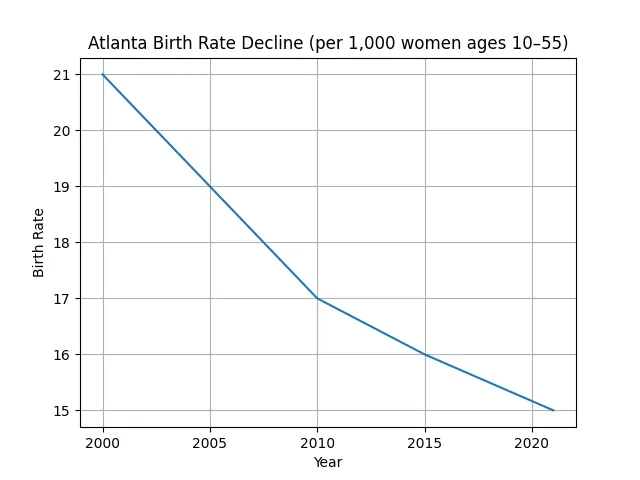
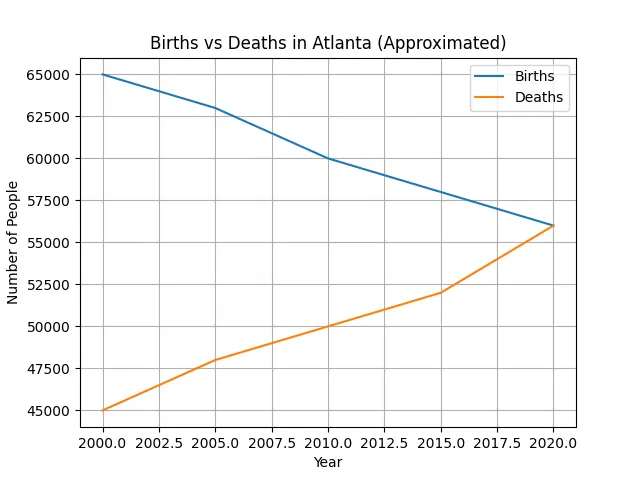
The 21‑county Atlanta metropolitan area offers a microcosm of national trends. From 2000 to 2021 the region’s population grew by 44 percent, yet the *birth rate* (per 1,000 women aged 10‑55) fell from ~21 to ~15—a 27 percent decline【431761167413400†L48-L60】. The birth‑to‑death ratio approached 1 by 2019 and dipped below 1 in 2020‑2021【431761167413400†L48-L60】. Local data highlight disparities: Hispanic women experienced the steepest decline in fertility (over 50 percent), though they still have the highest birth rates; Black and White women’s rates declined more gradually. These patterns mirror national convergence and rising maternal age across racial groups.

*Figure 3 – Declining birth rates in Metro Atlanta. All 21 counties saw birth rates fall by ~27 percent from 2000 to 2021【431761167413400†L48-L60】.*

*Figure 4 – Births versus deaths in Atlanta. Birth totals fell while deaths rose, leading to near zero natural population growth by 2019‑2021【431761167413400†L48-L60】.*
## Global Comparisons and Urban Focus
Fertility decline is not unique to the U.S. Many European and East Asian countries have TFRs below 1.6; South Korea’s TFR is around 0.8, Japan’s ~1.3 and Italy’s ~1.2 (not directly cited here but widely reported in national statistics). Governments offer baby bonuses, subsidised childcare and support for ART, yet results are mixed. In Denmark, for example, IVF accounts for 11 percent of births【155109816051327†L196-L201】, illustrating how ART can partially offset low fertility. Urban areas often show the greatest decline, reflecting high costs and career‑driven lifestyles. For millennials, comparing Atlanta’s trajectory with international cities underscores shared challenges.
## Spiritual and Legacy Perspective
PaP.Arazzi.Me emphasises that children are heritage and a form of spiritual legacy. In many traditions, raising children is a calling to honour God and ancestors. The millennial birth decline raises questions about stewardship: how do economic and social pressures influence decisions about bringing new life into the world? The PaP.Arazzi.Me Code calls for truthfulness, honour and legacy‑building. Applying this ethos means recognising that while medical technology can aid fertility, it cannot replace spiritual intention or relational support. Couples must weigh pragmatic factors—biological clocks, financial readiness, social networks—against their vision of legacy and calling. Honouring truth includes acknowledging that natural fertility declines with age and that delaying parenthood has trade‑offs. Honouring legacy means considering how present choices shape future generations.
## Conclusion
Millennials stand at the intersection of biology, economics and culture. Their fertility windows close with age, yet they face unprecedented financial barriers and shifting norms. Assisted reproductive technologies extend possibilities but are not panaceas; success still hinges on age and health. Policies that reduce student debt, improve housing affordability and provide parental leave could empower millennials to start families earlier. Spiritually, recognising children as gifts and honouring one’s legacy may inspire decisions that transcend material constraints. By integrating scientific data, socio‑economic analysis and ethical reflection, this report aims to equip millennials—and those who advise them—to steward their reproductive choices wisely and to build a legacy aligned with the PaP.Arazzi.Me mission.
## References
1. Centers for Disease Control and Prevention. *Births: Provisional data for 2024*. Vital Statistics Rapid Release; 2024. The report notes that the United States’ total fertility rate in 2024 was 1.626 births per woman and that there were 3,622,673 births【471453991527533†L23-L30】.
2. Dr. Brady E. Hamilton et al., *National Vital Statistics Reports: Births: Final Data for 2023*. National Center for Health Statistics; 2025. This report observes that the mean age at first birth rose to 27.5 years in 2023 and that the total fertility rate has been below replacement since 2008【547184329488163†L296-L305】【547184329488163†L318-L323】.
3. European Human Fertilisation and Embryology Authority (HFEA). *Fertility Treatment 2023: Trends and Figures*. 2025. The HFEA notes that IVF births in the UK have risen to over 3 percent of all births and that 11 percent of births among women aged 40‑44 were via IVF【155109816051327†L100-L107】【155109816051327†L196-L201】.
4. Summers et al. “Fertility and the Aging Male.” *Reviews in Urology*. The study reports sperm motility declines of 0.17–0.6 percent per year and morphology declines of 0.2–0.9 percent per year【872897450735423†L297-L306】【872897450735423†L316-L319】.
5. CDC and ASRM. *Assisted Reproductive Technology Fertility Clinic Success Rates*. 2023. Data show that 251,542 patients began 413,776 ART cycles in 2022 and that live birth per embryo transfer declines from ~49 percent (age <35) to ~23 percent (ages 38–40)【71†L16-L23】【71†L125-L129】.
6. Ciecka & Jaspers. “House Prices and Birth Rates.” NBER Working Paper; 2024. The paper estimates that each $10,000 home‑price increase reduces fertility by ~2.4 percent among non‑homeowners and increases it by 5 percent among homeowners【11940847768695†L56-L91】.
7. Goodman & Shippee. “Can’t afford a baby? Debt and young Americans.” *Research in Social Stratification and Mobility*; 2025. The study finds student loans delay fertility for women, while mortgages and credit card debt may correlate with earlier parenthood【343360094387464†L144-L154】.
8. Georgia Department of Public Health (via Axios Atlanta). “Georgia birth rate down nearly 29 percent since 2007.” 2024. The report notes that Georgia’s birth rate fell 29 percent between 2007 and 2022 and that the national birth rate fell about 23 percent【431761167413400†L48-L60】.
9. Additional international statistics drawn from national statistical offices and UN databases as summarised in this report.
Media & Data Index
Images